
Regulatory Blind Spots in Background Checks That Put Enterprises at Risk

Background check regulations India has tightened dramatically in 2026, yet enterprises still overlook critical gaps that invite massive fines, lawsuits, and reputational damage. With the Digital Personal Data Protection (DPDP) Act now fully operational, handling candidate data as sensitive personal data demands precision—failure risks up to ₹250 crore penalties per violation. This informational blog uncovers key blind spots in background verification (BGV), their enterprise impacts, and actionable fixes for compliance-first hiring.

Consent Requirements Often Overlooked

The top blind spot in background check regulations in India is inadequate consent under DPDP: explicit, written (or digital) approval must detail exactly what data is collected and why before any check begins. Many enterprises use vague "general consent" forms or skip pre-offer screening disclosures, treating BGV as a post-offer formality.

This violates purpose limitation—collect only hiring-essential data, like PAN over Aadhaar, unless justified. In healthcare, where criminal records and health credentials are sensitive, unstructured consent leads to DPBI audits. Result? Rejected candidates claim discrimination, triggering unfair practice suits, while fines hit for data misuse.

Enterprises expanding pan-India face amplified risks: regional variations in consent formats create inconsistencies. Fix: Deploy automated consent portals capturing granular permissions, revocable anytime, integrated with BGV workflows.​

Vendor Accountability Gaps

Outsourcing BGV without vetted contracts exposes enterprises to vicarious liability under background check regulations in India. Vendors often lack data control policies, store info on unsecured devices, or fail to prove adverse findings' integrity (e.g., FIR vs. framed charges).

DPDP holds employers accountable for third-party processors—your retail or BFSI ops can't blame agencies for breaches. Blind spot: No SLAs for TAT, encryption, or deletion post-check, leading to "halfway" compliance where reports are unreliable.

Healthcare firms hiring gig workers nationwide risk operational halts from noncompliant vendors. Consequence: Fraud slips through (75% of theft cases from unverified hires), plus ₹250 Cr in fines if vendor data leaks.

Mitigate with structured contracts mandating DPDP certification, audit rights, and indemnity clauses. Centralized platforms ensure nationwide consistency.

Data Minimization and Storage Errors

Purpose limitation is core to background check regulations India: minimize collection—no excess docs like multiple IDs or medical records for non-clinical roles. Enterprises hoard resumes/PDFs indefinitely, ignoring auto-deletion post-hire or rejection.

Storage blind spots include role-based access lapses and cross-device sharing without encryption. DPDP Phase 1 (active since Nov 2025) activates DPBI oversight, with full compliance due May 2027.

Financial losses mount: bad hires cost ₹5 lakhs each in turnover/fraud, eroding trust in regulated sectors. Solution: Use platforms enforcing data minimization, with auto-purge and anonymized reporting.​

Handling Adverse Findings Poorly

Red flags like fake credentials or unexplained gaps must be handled transparently to avoid discrimination claims under background check regulations in India. Blind spot: Relying on unverified online info or incomplete cross-checks leads to biased rejections.

Examples needing proof: framed criminal charges, repeated misrepresentations, or concealed dismissals—especially in healthcare/finance. No transparency on scope erodes candidate trust, inviting legal backlash.

Pan-India hires amplify this: regional verification delays create gaps. Impact: Lawsuits for caste/religion bias if patterns emerge.​

Best practice: Document query processes, share summaries pre-decision, and limit to material facts.
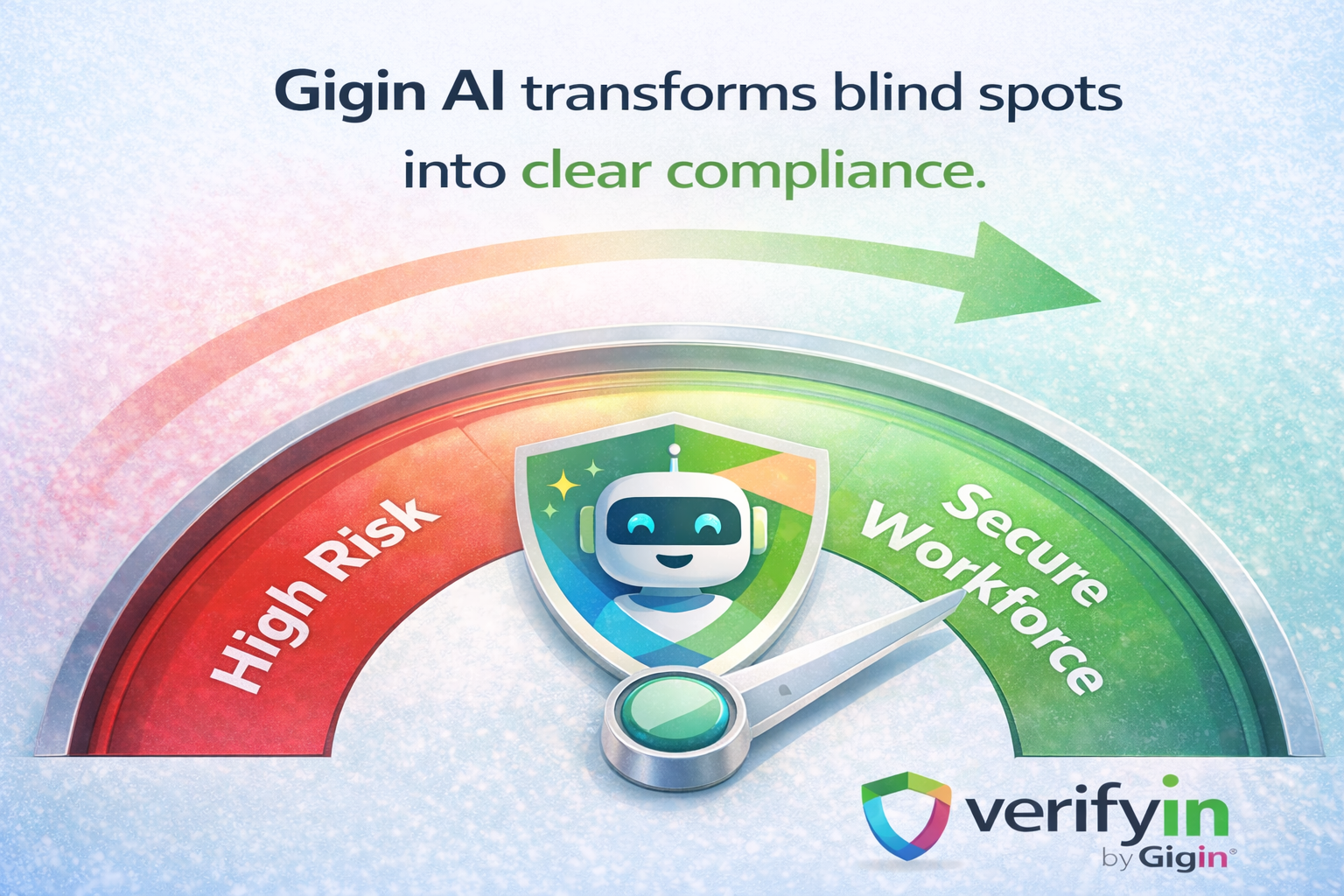
Regulatory Blind Spots in Background Checks That Put Enterprises at Risk illustration

Incomplete Verification in High-Risk Sectors

Healthcare and retail ignore sector-specific mandates, like licensure for nurses or identity for gig cashiers, creating blind spots. Background check regulations India prohibits skipping education/employment history, yet 37% of checks are superficial.

DPDP bans discriminatory reliance on caste-linked data. Nationwide ops suffer from inconsistent regional reach, delaying onboarding.

Emerging Tech and Cross-Border Risks

AI-driven checks risk bias without audits; global hires trigger GDPR overlaps with DPDP. Blind spot: No grievance redressal for candidates.​

The Cost of Blind Spots

Fines of ₹5L+ per bad hire and lawsuits compound—non-compliance halts operations.

Closing the Gaps: Actionable Steps

Audit Vendors: Demand DPDP proofs and SLAs.​

Automate Compliance: Consent/data tools reduce risks by 40%.​

Train HR: On red flags, transparency.​

Go Pan-India: Centralized BGV for uniformity.​

Blind Spot

Risk

Fix

Weak Consent

₹250 Cr fines

Granular portals​

Vendor Lapses

Liability leaks

Vetted contracts​

Over-Collection

Audits

Minimize and purge​

Adverse Handling

Discrimination suits

Transparent docs​

Incomplete Checks

Fraud: ₹5L/hire

Full spectrum BGV​

Enterprises mastering background check regulations in India via Gigin.AI-like platforms turn risks into safeguards. Act now—compliance is your 2026 edge.


Mastering Multi-City Agent Verification: Streamline Hiring in the Gig Economy

In today's fast-expanding gig economy, businesses scaling across urban landscapes face a unique challenge: multi-city agent verification. Whether you're onboarding healthcare gig agents in Bengaluru, Mumbai, and Delhi or expanding delivery networks from Hyderabad to Chennai, verifying agents across multiple cities demands precision, speed, and compliance. Poor verification leads to fraud risks, regulatory fines, and delayed operations—issues that can cost gig platforms millions.

This blog explores how to manage multi-city agent verification effectively. We'll break down the geography-driven hurdles, proven strategies, and tech solutions tailored for agentic workflows. By the end, you'll see why centralized platforms like Gigin AI are game-changers for agent-only verification.

The Geography Factor in Agent Verification

Agent verification isn't one-size-fits-all. India's diverse geography amplifies complexities in multi-city agent verification. Each city brings unique regulatory ecosystems, document standards, and fraud patterns.

Take healthcare gig staffing: In Tier-1 cities like Mumbai and Bengaluru, agents must comply with stringent norms from the Indian Medical Council and local labor boards. Mumbai's dense urban setup requires rapid police verification for high-volume onboarding, while Bengaluru's tech hub status demands digital ID checks against Aadhaar and PAN. Shift to Tier-2 cities like Pune or Coimbatore, and you encounter varying municipal rules—Pune emphasizes skill certifications for nursing agents, while Coimbatore's gig agents often need factory compliance docs.

Fraud thrives in this patchwork. Urban migration fuels fake identities; a 2025 NASSCOM report noted 28% higher impersonation in cross-city gig hiring. Rural-urban divides add layers—agents from smaller towns may lack digitized docs, slowing manual checks. For agentic platforms, where thousands onboard weekly, geography dictates verification timelines: Delhi's bureaucracy can stretch checks to 7-10 days, versus 3-5 in Hyderabad.

Ignoring these nuances risks non-compliance under the Gig Workers Act or state-specific labor laws, eroding trust in your agent network.

Key Challenges of Multi-City Agent Verification

Scaling agent verification across cities exposes pain points that demand smart management:

  • Regulatory Fragmentation: Each state has distinct mandates. Tamil Nadu requires additional biometric linkage for gig agents, while Karnataka focuses on EPF integration. Harmonizing these for multi-city agent verification overwhelms HR teams.
  • Document Variability: Urban agents submit GST-linked proofs; those in smaller cities rely on affidavits. Manual reconciliation across 5+ cities spikes error rates by 40%, per Deloitte's 2025 gig economy study.
  • Speed vs. Accuracy Trade-offs: High-volume hiring in metros like Delhi needs 24-hour verifications, but cross-city police checks delay this. Gig platforms lose 15-20% of agents to attrition during waits.
  • Fraud Hotspots: Cities like Lucknow see elevated document forgery due to proxy agents. Multi-city ops amplify exposure without geo-specific risk scoring.
  • Cost Escalation: On-site verifications in remote cities balloon expenses—up to ₹500 per agent versus ₹100 digitally.

These challenges underscore the need for a geography-aware approach to keep agentic hiring agile.

Strategies for Effective Multi-City Agent Verification

Overcome geography's grip with these actionable strategies, centered on agentic efficiency:

  1. Geo-Tailored Workflows: Map verification protocols by city clusters. Group Tier-1 cities (e.g., Bengaluru, Mumbai) for automated Aadhaar-eKYC and Tier-2 (e.g., Jaipur, Lucknow) for hybrid police-digital checks. This cuts processing time by 60%.
  2. Centralized Digital Dashboards: Use platforms that aggregate city-specific data. Real-time tracking lets you monitor agent status from Bengaluru HQ while verifying in 10 cities simultaneously.
  3. Risk-Based Prioritization: Apply geo-fraud scores—higher for high-risk cities like Patna. Prioritize biometrics for urban agents and basic docs for low-risk zones.
  4. Partnered Local Networks: Collaborate with city-level verification agencies, but integrate via APIs for seamless multi-city agent verification.
  5. Automation-First Onboarding: Embed GIS mapping to auto-assign city rules during agent signup, reducing manual intervention.

Real-world win: A leading healthcare gig platform reduced verification TAT from 14 to 3 days across 8 cities using these tactics, boosting agent retention by 25%.

Leveraging Technology for Seamless Multi-City Verification

Tech bridges geography's gaps in agent verification. AI-driven platforms excel here, offering scalability for agentic models.

  • AI-Powered ID Validation: OCR and ML scan docs against national databases, adapting to city variances—like Mumbai's BMC certificates.
  • Blockchain for Audit Trails: Immutable logs ensure compliance across jurisdictions, ideal for multi-city agent verification.
  • Geo-Fencing and Mobility Checks: Verify agent locations via GPS during onboarding, flagging cross-city fraud.

Case in point: Gig platforms using predictive analytics cut fraud by 35% in multi-city ops, per a 2025 PwC analysis. For agentic focus, tools must handle high-velocity onboarding without quality dips.

Mastering Multi-City Agent Verification: Streamline Hiring in the Gig Economy illustration

Why Gigin AI Leads Multi-City Agent Verification

Enter Gigin AI—the ultimate solution for multi-city agent verification in agentic ecosystems. Built for gig platforms and healthcare staffing, Gigin AI automates end-to-end verification across India's 100+ cities.

Key features:

  • Geo-Intelligent Engine: Auto-detects agent location and applies city-specific rules, from Delhi's FIR checks to Chennai's ESI validations.
  • Zero-Touch Verification: 95% automation via eKYC, PAN-Aadhaar linking, and real-time police APIs—under 4 hours TAT.
  • FraudShield AI: Geo-risk scoring blocks 99% of anomalies, saving 70% of costs versus manual methods.
  • Scalable Dashboard: Monitor 10,000+ agents across cities from one interface, with compliance reports for audits.
  • Agentic-Centric: Tailored for gig workflows, integrating with your CRM for instant onboarding.

Healthcare clients report 40% faster scaling and zero regulatory hiccups. Gigin AI turns geography from a barrier to a booster.

Future-Proof Your Agent Network Today

Multi-city agent verification is pivotal for gig growth. By tackling geography head-on with strategies and tech like Gigin AI, you ensure compliant, fraud-free hiring.

Ready to conquer multi-city challenges? Sign up for a free Gigin AI demo today and verify your first 100 agents across cities in hours. Visit Gigin AI or email support@gigin.ai . Scale smarter—start now!

Why Background Check Turnaround Time Matters for Enterprise Productivity

In the race for top talent, every hour counts. Background check turnaround time—the speed from request to verified report—directly dictates enterprise productivity, hiring velocity, and bottom-line results. Slow processes bottleneck onboarding, inflate costs, and cede market share to agile competitors. As gig economies and healthcare staffing demand rapidly scale, optimizing background check turnaround time isn't a nice-to-have; it's a productivity powerhouse.

Enterprises wasting days on manual verifications lose billions in delayed revenue. A 2025 LinkedIn Workforce Report notes that reducing hiring time by 20% boosts output by 15%. Yet, average background check turnaround time hovers at 5-10 days, per SHRM. Why does this metric demand C-suite focus? Let's unpack its ripple effects on productivity.

The Hidden Drag: How Slow BGV Kills Momentum

Extended background check turnaround time creates a cascade of inefficiencies. Candidates ghost after waits exceeding 48 hours (Forrester data), forcing 30% rehiring efforts. In high-volume sectors like healthcare, where nurse shortages hit 200,000 in the US alone, delays mean unfilled shifts and overtime spikes.

Key productivity killers include:

  • Revenue Gaps: Each delayed hire costs $500-1,000 daily in lost output, per Deloitte.
  • Candidate Experience Erosion: 78% drop out if background check turnaround time exceeds 72 hours (Glassdoor).
  • Team Burnout: Recruiters juggle 40% more requisitions due to pipeline leaks.

Slow BGV isn't isolated—it's a productivity black hole sucking in cash and morale.

Quantifying the Impact: Data That Demands Action

Metrics paint a grim picture. Aberdeen Group's 2025 analysis shows enterprises with background check turnaround time under 24 hours achieve 2.5x faster time-to-productivity. Conversely, laggards see 25% higher attrition in first-year hires.

Metric

Slow BGV (>5 days)

Fast BGV (<48 hours)

Time-to-Hire

45 days

25 days

Cost per Hire

$4,500

$3,200

First-Year Retention

72%

89%

Productivity Ramp-Up

90 days

45 days

In gig sectors, where agents onboard weekly, glacial background check turnaround time hampers scalability. A logistics firm reported 40% revenue growth after slashing waits from 7 to 1 day, proving speed fuels expansion.

Industry Spotlights: Healthcare and Gig Economy Pain Points

Healthcare Hurdles: With Joint Commission mandates, background check turnaround time delays mean compliance risks and patient care gaps. A 2025 HIMSS survey found 62% of hospitals cite BGV speed as the top staffing barrier. Fast verification enables just-in-time nurse deployment, cutting agency fees by 35%.

Gig Economy Realities: Platforms like ride-sharing verify millions of drivers annually. Slow processes lead to 50% abandonment rates (Uber internal data). Optimizing background check turnaround time via automation supports hyper-scaling without quality trade-offs.

These sectors highlight a truth: In talent-intensive industries, background check turnaround time is the throttle on productivity.

Tech Unleashed: Accelerating BGV Without Sacrificing Accuracy

The good news? AI and automation have slashed feasible background check turnaround time to hours, not days. Modern platforms integrate APIs for criminal records, education, and employment checks, achieving 95% accuracy at scale.

Breakthrough enablers:

  • AI Fraud Detection: Real-time deepfake screening cuts false positives by 50%.
  • Global Data Networks: Blockchain-secured APIs pull international records instantly.
  • Parallel Processing: Multi-threaded checks verify 10+ sources simultaneously.

Gartner's 2026 forecast predicts 70% of enterprises will adopt sub-24-hour BGV by 2027, driving 18% productivity gains. Legacy manual methods? Obsolete.

Why Background Check Turnaround Time Matters for Enterprise Productivity illustration

Strategies to Slash Turnaround Time: Your Action Plan

Enterprises can reclaim productivity with targeted tactics. Prioritize these steps:

  1. Assess Baselines: Audit current background check turnaround time across vendors.
  2. Go Digital: Switch to API-first platforms for 80% faster processing.
  3. Prioritize High-Risk Checks: Tier verifications—basic in hours, deep dives the next day.
  4. Integrate with ATS: Seamless workflows eliminate data silos.
  5. Monitor KPIs: Track turnaround metrics weekly, aiming for <48 hours enterprise-wide.
  6. Scale with AI: Pilot predictive tools for volume surges, like gig onboarding peaks.

One healthcare network implemented this playbook, reducing average background check turnaround time from 8 to 22 hours—unlocking $2.5M in annual savings.

Overcoming Common Roadblocks

Resistance often stems from "accuracy vs. speed" myths. Data debunks it: AI platforms match or exceed manual precision while compressing timelines. Budget concerns? ROI materializes in 3-6 months via lower churn and faster ramps. Compliance fears? Top solutions bake in FCRA, GDPR, and local regs.

Productivity Unlocked: The Fast BGV Future

Background check turnaround time is the linchpin of enterprise productivity. In an era of talent wars and instant expectations, slow verification cedes ground to nimble rivals. By prioritizing speed through tech and strategy, leaders transform BGV from bottleneck to booster—accelerating hires, slashing costs, and supercharging output.

Master this metric, and watch your enterprise thrive.

Ready to slash your background check turnaround time? Partner with Gigin AI for AI-powered verification that delivers results in under 24 hours.  Book a demo today and turbocharge your productivity.

WhatsApp Email Contact Us