
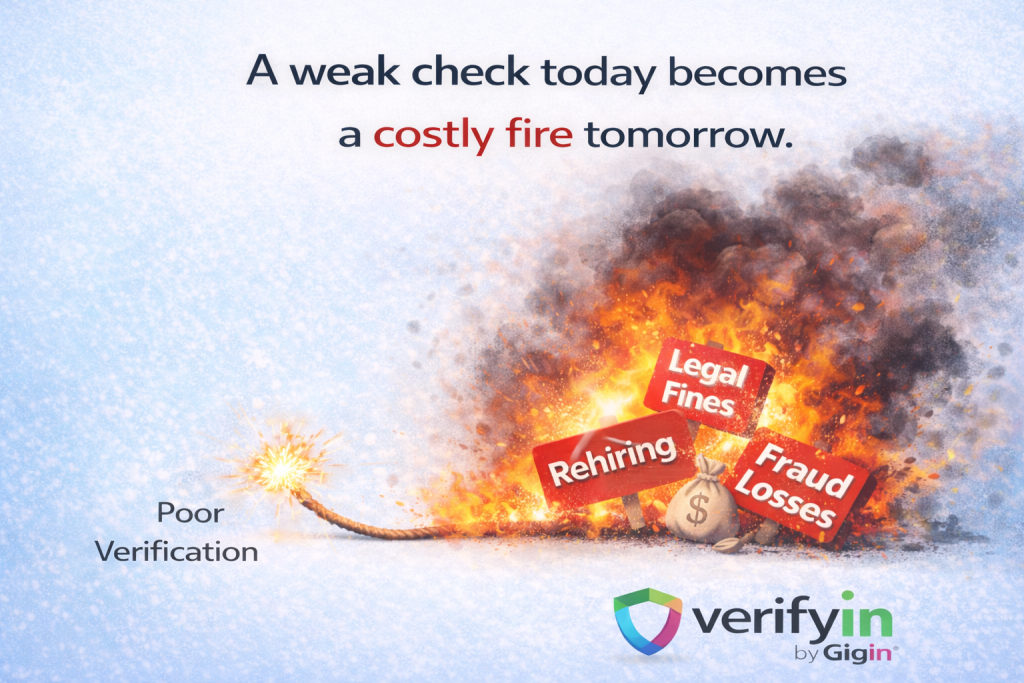
In today's rapidly evolving business landscape, poor background verification exposes enterprises to escalating financial, operational, and reputational risks. As hiring scales across gig, remote, and traditional workforces, the stakes of skipping or skimping on thorough checks have never been higher.
Financial Toll of Bad Hires
Negligent hiring from inadequate background verification drains enterprise resources at multiple levels. Companies lose an average of 5% of annual revenue to internal fraud enabled by unvetted employees, translating to millions for mid-sized firms. Executive mis-hires alone can cost over $1 million when factoring in lost productivity, severance, and replacement expenses.
Beyond direct theft or embezzlement, poor verification leads to operational disruptions. Fake candidates with fabricated credentials cause project delays and quality failures, as seen in cases where vendors supplied unqualified hires for years, eroding delivery timelines. Training costs skyrocket when skills gaps emerge post-onboarding, often 30% higher than preventive verification fees.
Legal fines compound these losses. Industries like finance and healthcare face regulatory penalties for compliance lapses, with breaches tied to unverified staff leading to multimillion-dollar settlements.
Reputational Damage Amplified
A single high-profile incident from failed background checks can tarnish a brand for years. News of employee fraud or misconduct spreads rapidly on social media, eroding client trust and triggering vendor pullouts. One IT firm in Chennai hired 20 unverified engineers for a European project, resulting in scandals that damaged partnerships indefinitely.
Enterprise clients demand vetted talent pipelines. When fraud surfaces, competitors capitalize, poaching market share amid the fallout. Studies show employer branding suffers 40% more attrition in turnover after such events, creating a vicious cycle of rehiring costs.
In the gig economy, where 40% of workers are contract-based, lax verification invites systemic rot. Platforms onboarding fake profiles lose user confidence, mirroring vendor ecosystems collapsed by falsified SAP experts.
Operational and Security Vulnerabilities
Unverified employees introduce insider threats beyond finances. Criminal records or financial misconduct undisclosed during hiring lead to data breaches or IP theft, with enterprises facing 28% higher breach risks from poor screening. Workplace safety suffers too—negligent hires with violent histories endanger teams, inviting lawsuits.
Scalability falters in high-volume hiring. Manual checks miss deepfakes and AI-forged documents, prevalent in 2025's fraud landscape, delaying onboarding by weeks. Gig workers, often remote, amplify these gaps, as traditional databases fail against transient identities.
Team morale plummets amid distrust. Colleagues sense vulnerabilities, reducing collaboration and boosting voluntary exits by 20-30%.
The New Age Imperative
The "New Age of Enterprise BGV" demands AI-driven solutions to counter rising complexities. Traditional methods catch only 60% of discrepancies, while predictive analytics flags patterns in real-time, cutting fraud by 45%. Automation scales for bulk gig hiring, achieving 70% faster turnarounds with built-in compliance.
In India, where resume falsification hits 52% for senior roles, AI verifies education, employment, and identities across fragmented sources. Continuous monitoring post-hire mitigates long-term risks, unlike one-off checks.
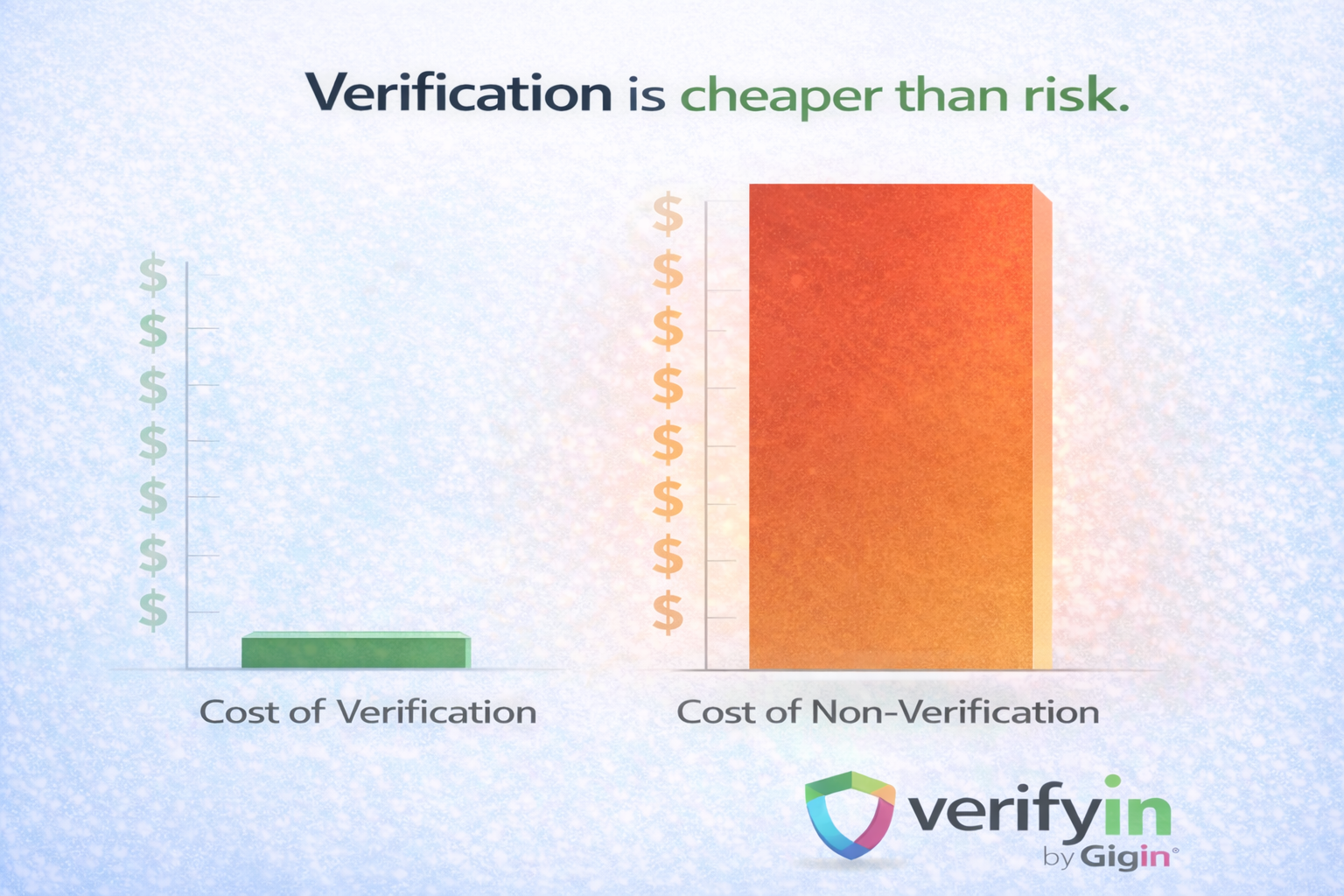
Enterprises embracing this shift see ROI: verification costs 1/10th of bad hire expenses, transforming risk mitigation into growth.
Gigin AI: Secure Your Future
Gigin AI's Verifyin platform revolutionizes background verification risks with AI precision. It detects deepfakes, validates multi-source data, and ensures compliance for enterprises scaling in the gig era.
Ready to slash risks? Partner with Gigin AI today at gigin.ai/verifyin for seamless, fraud-proof BGV.